

Foundations of Yagami Style
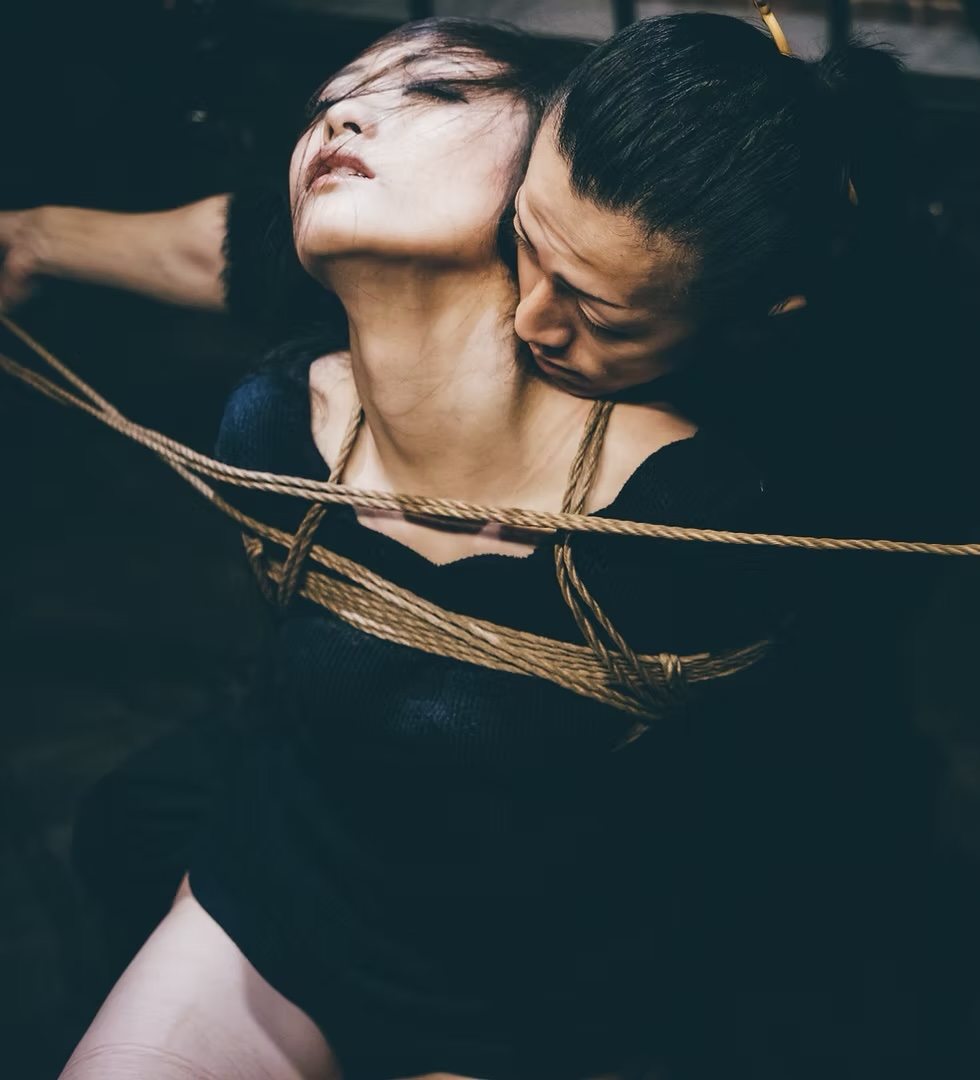
This one-day workshop offers a comprehensive introduction to the Yagami Style, Yagami Ren’s personal interpretation of Japanese rope art.
For Yagami, Shibari is an art form shaped by different traditions, personalities, and experiences. Rooted in the principles of Japanese martial arts, his approach combines traditional concepts with modern influences to create a distinctive and highly effective style.
Core Questions
- How can a body be guided, controlled, and immobilized efficiently and consciously?
- What does this experience feel like for both participants?
- How can rope create presence, connection, and intensity between two people?
Drawing from martial arts, Yagami applies concepts such as Maai (distance and timing) and Kyusho (vital points) to develop a conscious, sensual, and interactive rope practice.
Workshop Objectives
- Introduction to the three pillars of the Yagami Style
- Practical exercises for clear and intentional rope handling
- Exploration of distance, body geometry, and timing
- Theoretical foundations for deeper understanding and safer practice
This workshop cultivates presence, structure, and emotional intensity. Participants will experience Shibari as an art form, a means of expression between two people, and a powerful way to deepen connection and intimacy.
The Three Pillars of Yagami Style
NAWASUJI 縄筋 – Rope Expression
- Shoden: strictness, determination, precise and intense tying
- Toginawa: softness, gentleness, flowing surrender
- True expression emerges through the balance of hardness and softness.
TAIJUTSU 體術 – Body Work
- Using both bodies: Shibarite & Ukete
- Sankaku Gihō (Triangle): control through angles and geometry
- Enten Gihō (Circle): rotation, harmony, communication
- Fuchin Gihō (Floating & Sinking): using reflexes, weight, and Maai
- Taijutsu connects movement, balance, and interaction between two bodies.
KYUSHOUGAKU – Theory & Methodology
- Bridge between rope technique and body work
- Kihon Sangen Shoku: three essential fundamental principles
- Kisohachiron: eight foundational theories (e.g. Kassaatsuron, Shiseiron, Sankakuron)
- Theory deepens the understanding of shibari, taijutsu, and erotic dynamics.